

Telehealth Services in Illinois: What You Can (and Can't) Treat Online
Healthcare does not fit neatly into a busy schedule. A minor illness, medication question, mental health concern, or even ongoing health objectives can appear when getting to a medical office is very difficult.
With a phone, tablet, or even a computer, you often have another option. Telehealth services in Illinois give you access to qualified healthcare from a convenient location while allowing you to discuss symptoms, treatment options, and ongoing assistance without a traditional office visit.
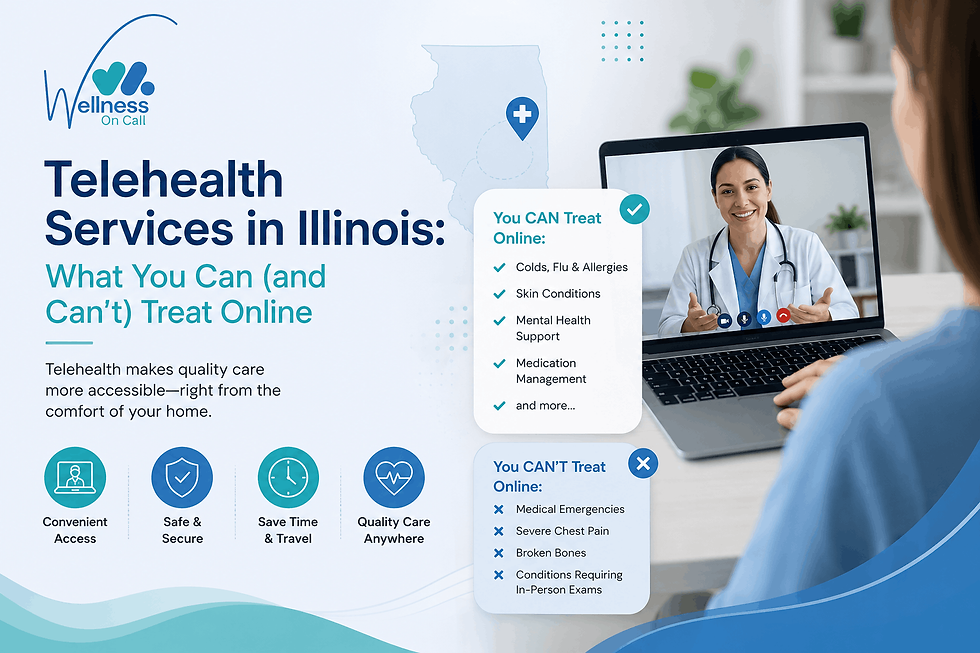
But online assistance has limits. A virtual appointment is very useful for a lot of conditions, but it does not replace each physical examination, test, procedure, or even emergency service. Understanding what you can treat online helps you pick the correct type of assistance and prevent delays when hands-on treatment is very much necessary.
What Is Telehealth and How Does It Work in Illinois?
Telehealth uses very secure technology to link you with a licensed healthcare professional without needing you to sit in a medical office. Depending on the service, your appointment may include a video visit, health history check, symptom discussion, medication check, treatment planning, or even follow-up assistance.
During telehealth in Illinois, you generally begin by sharing your symptoms and health concerns. Your provider asks questions, checks relevant information, and also determines whether your condition is appropriate for remote assistance. You may receive treatment guidance, prescriptions when clinically appropriate, referrals, or even instructions for an in-person check.
The process is convenient, but convenience does not remove the clinical standards. Illinois law requires healthcare professionals treating patients located in the state through telehealth to be licensed or otherwise authorized to practice in Illinois. Telehealth services are also subject to applicable standards of assistance and privacy needs.
Conditions Commonly Treated Through Telehealth
Online care works best when your provider can safely assess your concern without needing extensive hands-on examination or immediate testing. A lot of everyday health concerns fit this model.
Urgent, Non-Emergency Care
A virtual visit often helps when you have a health problem needing timely attention but does not look very life-threatening. Examples include mild respiratory symptoms, seasonal allergies, certain skin concerns, minor stomach complaints, headaches, or even other basic conditions.
A virtual urgent care in Illinois gives you a very practical way to discuss symptoms without waiting for a routine office appointment. Your provider checks what you describe and determines whether online treatment is appropriate.
If your symptoms suggest a serious or rapidly worsening condition, then online assistance is not the correct setting. Your provider may direct you toward in-person checking or emergency services instead.
The key is knowing the difference between a condition needing prompt medical attention and one needing immediate hands-on assistance.
Mental Health & Therapy
Mental health care often fits naturally into a virtual setting. You can discuss stress, anxiety, mood concerns, behavioral health needs, and also other appropriate concerns through a very secure online appointment.
Virtual therapy also gives you a private setting where you are comfortable discussing personal concerns. Depending on your needs and the scope of practice of the provider, the treatment may include counseling, behavioral strategies, follow-up sessions, or even other appropriate help.
Illinois law also regulates professionals who provide therapy through online methods. Therapy services must come from appropriately licensed professionals, which makes provider credentials an important part of choosing remote mental health care.
Chronic Condition Management (Diabetes, Medication Management)
Telehealth is also very useful when you already have an established health concern needing regular monitoring and communication.
For example, you may use online appointments to discuss diabetes management, check symptoms, talk about medication effects, or even address questions about an existing treatment plan. Medication management can also work well when your provider needs to review how you respond to treatment and determine whether additional evaluation is necessary.
A telehealth clinic in Illinois can make routine follow-up more convenient when your condition does not require an immediate physical examination.
You still need appropriate testing and in-person care when your provider cannot safely evaluate your condition online. Telehealth works as part of your overall care rather than as a replacement for every type of medical service.
Weight Loss & GLP-1 Programs
Weight management is also another area where virtual healthcare provides convenience. Your provider can discuss your health objectives, medical history, current medications, lifestyle factors, and also other relevant information during an online appointment.
When clinically appropriate, a weight management program may include ongoing monitoring and medication discussions. GLP-1 medications need professional checks and appropriate follow-up, so online access does not mean medication is automatically suitable for you.
A structured virtual program can help you maintain regular communication with your provider while keeping your assistance focused on safety and long-term health objectives.
What Telehealth Cannot Replace?
Telehealth provides flexibility, but it has proper boundaries. Some medical concerns need physical contact, diagnostic testing, imaging, procedures, or even direct observation.
You may need in-person assistance when your provider needs to:
● Perform a physical examination
● Check vital signs that require clinical equipment
● Collect blood, urine, or even other samples
● Perform imaging or diagnostic testing
● Treat a wound or injury
● Provide a procedure or injection that requires an office setting
● Evaluate severe or rapidly changing symptoms
● Provide emergency treatment
An online doctor in Illinois can often identify when remote care is not enough. This decision is a very important part of safe telehealth because the objective is not just to keep each appointment online. The objective is to receive the correct level of assistance for your condition.
Emergency symptoms also need immediate attention rather than waiting for a virtual appointment. If you experience a potentially life-threatening problem, then seek emergency medical assistance.
Is Telehealth Legal and Regulated in Illinois?
Yes. Illinois has a Telehealth Act establishing requirements for healthcare professionals providing services through telehealth. A professional treating a patient located in Illinois through telehealth must generally be licensed or authorized to practice in the state.
Illinois also requires telehealth care to remain within the provider's legal scope of practice and follow standards that apply to comparable in-person care. Privacy, security, and confidentiality requirements also apply to telehealth services.
That means telehealth services in Illinois are not simply informal online conversations. They are part of regulated healthcare. Your provider still has professional responsibilities when care takes place through a screen.
Rules can differ based on the profession and type of service. For example, certain healthcare professions have additional telehealth requirements. Illinois also maintains professional licensing and regulatory information through the Department of Financial and Professional Regulation.
How to Choose a Licensed Illinois Telehealth Provider
Picking the correct provider makes your online healthcare experience much more useful and secure. Before booking an appointment, you should consider some important factors.
Check licensing. Make sure the healthcare professional is appropriately licensed or authorized to provide assistance to patients in Illinois.
Review the services. Look for a provider properly explaining which conditions and services are appropriate for online appointments.
Ask about follow-up assistance. A reliable provider should have a proper process for referrals or in-person assistance when virtual treatment is not enough.
Consider privacy. Your appointment should use secure systems designed for healthcare communication and protect your personal information.
Look for clear communication. You should understand how appointments work, how prescriptions are handled when appropriate, and also how you contact the provider with follow-up questions.
Pick assistance fitting your needs. The best online healthcare option is not necessarily the one offering the longest list of services. It is the one matching your health concern and provides an appropriate level of medical oversight.
For convenient and patient-focused online assistance, Wellness On Call provides an accessible approach to healthcare fitting into your routine. When your concern is suitable for virtual treatment, telehealth services in Illinois give you a very practical way to connect with assistance without adding an unnecessary office trip.
Convenient Care That Fits Your Life
Telehealth makes many types of healthcare easier to access, from non-emergency concerns and mental health support to chronic condition management and weight management programs. But online assistance has limits. Physical examinations, testing, procedures, and emergency treatment need appropriate in-person services.
Understanding the boundaries helps you make smarter healthcare picks. When your condition is suitable for remote evaluation, Wellness On Call offers a convenient way to explore professional care from where you are. With the right provider, telehealth services in Illinois become more than a convenient appointment option—they become a practical part of modern healthcare.
Get Convenient Care From Where You Are
When a health concern does not require an office visit, you can make care easier to fit into your day. Connect with Wellness On Call to explore available virtual healthcare options and find out whether an online appointment fits your needs.
Contact us by calling 314-252-0245 to take the next step toward simple, accessible care that works around your schedule.

Comments